
Views: 0 Author: Site Editor Publish Time: 2026-06-29 Origin: Site


Upgrading entry-level billiard cues is a milestone for players aiming to boost their competitiveness. Most buyers face a core choice: classic solid wood cues with traditional craftsmanship, or modern composite cues built with cutting-edge engineering. Both categories carry irreplaceable advantages on the pool table.
Overhyped carbon fiber and low-deflection shaft marketing often confuse buyers. Many players blindly switch to modern tech cues only to find the new equipment clashes with their inherent stroke habits, and they lose the familiar tactile hit that brings stable confidence during matches.
This article delivers an objective, data-backed comparison between classic and modern billiard cues. The comprehensive guide helps you make rational, performance-oriented purchasing decisions based on your unique play habits, rather than being misled by brand sponsorship propaganda.
Performance & Sensory Contrast: Modern cues focus on stable physical properties and minimal cue ball squirt; classic wood cues deliver distinctive resonant vibration and natural shaft flex loved by traditional players.
Learning Curve: Switching to modern low-deflection cues demands a long adaptation period, as players need to abandon years of habitual aiming compensation for side spin shots.
Durability & Long-Term Value: Carbon fiber shafts have a higher upfront cost yet fully eliminate wood warping risks, perfect for players who travel frequently to tournaments.
Popular Hybrid Matching Scheme: Most skilled players pair a classic wood butt (for customized weight, texture and appearance) with a modern low-deflection composite shaft for competitive performance.
Understanding the development of billiard cue manufacturing helps buyers judge equipment rationally. The billiard cue industry has undergone revolutionary changes in the past decades: manufacturers shifted from hand-carved single solid wood cues to multi-component precision engineering sporting gear. We divide mainstream cues into two clear categories.
Classic cues represent the traditional craft standard. Handcrafters adopt whole solid timber as raw materials: hard rock maple dominates North American markets, while European brands prefer ash wood. Key structural features: solid wooden ferrules, wood-to-wood joints or standard steel pin connections, gradual tapers thickening from tip to joint. This structure creates soft, natural shaft flex at impact, forming unique organic hitting feedback.
Modern cues adopt aerospace composite materials, completely breaking the design logic of all-wood cues. Carbon fiber and fiberglass replace solid wood front shafts; manufacturers adopt hollow front-end structures and ultra-lightweight specialized ferrules, plus radial pins or quick-release Uni-Loc joint systems. Every structural design targets reducing front-end mass to cut cue ball squirt when applying heavy English, leading to totally different ball control performance compared with classic wood cues.
Pure cue enthusiasts stick to solid wood cues not merely out of nostalgia — solid wood brings irreplaceable tactile advantages for competitive matches.
Wood transmits vibration uniformly from the tip to your grip hand, providing instant hit judgment. A clean center-ball strike delivers full, warm resonant thump; off-center miscues generate sharp, messy vibration. Real-time tactile cues allow players to adjust stroke posture and force without pause.
High-quality maple wood forms stable flex under impact. Players who practice long-term develop automatic aiming compensation matching the wood’s deflection rule; the natural bend of wooden shafts forms an intuitive control logic hard to replicate by rigid composite materials.
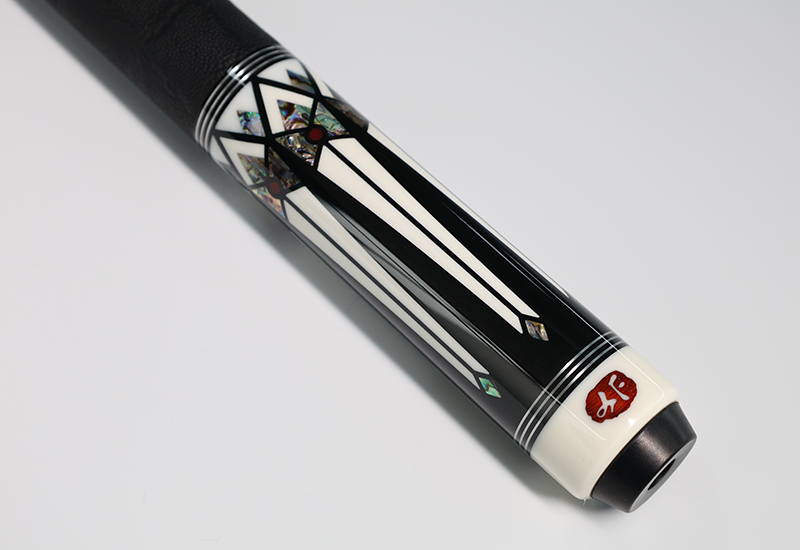
For many players, a custom wood cue is functional artwork. Craftsmen use rare exotic timber, elaborate multi-layer inlays, complex veneer and high-density Irish linen wraps to build unique aesthetics. Premium solid wood cues hold stable resale value and even appreciate among cue collectors over time.
Solid wood is highly sensitive to ambient conditions and requires rigorous maintenance:
Temperature & humidity fluctuations easily cause shaft swelling, shrinkage, bending or cracking;
Leather tips and wooden ferrules wear faster, requiring regular polishing, trimming and wax maintenance;
Prone to dents and scratches under daily collision.
Composite materials reshaped the billiard equipment industry. Engineers optimize every component to eliminate unstable variables that cause missed shots, with low deflection as the core design target.
Side spin (English) pushes the cue ball off the aiming line, an effect named "squirt" or deflection. Modern hollow front shafts + lightweight ferrules reduce front-end mass greatly. At the moment of impact, the light front shaft deflects sideways faster, so the cue ball runs closer to your original aiming line and cuts aiming compensation drastically on heavy spin shots.
Carbon fiber features outstanding environmental stability: no swelling in humid weather, no cracking under low temperature, no permanent deformation even left in high-temperature car trunks. The material resists scratches and dents, maintaining consistent hitting performance in all scenarios.
Carbon fiber shafts slide effortlessly through your bridge hand, eliminating the need for talcum powder to reduce friction. Note maintenance limits: rough abrasive cleaning pads will permanently damage carbon fiber woven texture; only dedicated soft cleaning wipes are allowed.
a. Muted hitting feedback: Carbon fiber creates thin, hollow pinging sound at impact without the warm resonance of maple wood. Subtle stroke errors cannot be identified via vibration, raising the difficulty of self-adjustment.
b. High purchase cost: Advanced composite molding technology pushes up the entry price significantly.
c. Material cannot fix flawed basic stroke; low-deflection performance only optimizes spin shot stability, failing to remedy bad stance or unsmooth delivery.
Evaluation Dimension | Classic Solid Wood Cues | Modern Composite Carbon Fiber Cues |
Squirt / Deflection | High squirt, requires manual aiming offset for spin shots | Ultra-low squirt, nearly follows original aiming line |
Tactile & Sound Feedback | Rich resonant vibration, clear acoustic hit signal | Weak, hollow feedback, difficult to sense minor miscues |
Environmental Durability | Vulnerable to humidity & temperature, easy to warp/crack | Anti-warp, anti-scratch, unaffected by climate changes |
Surface Friction & Maintenance | Needs regular polishing, waxing, occasional talc | Ultra-smooth sliding; only special soft wipes for cleaning |
Classic wood cues force players to form fixed offset habits for side spin aiming. After switching to low-deflection modern cues, long-time players tend to over-compensate and miss pockets, requiring systematic re-training of aiming logic.
Solid wood cues have lower initial purchase prices but carry hidden long-term costs: regular maintenance, replacement of warped shafts and professional wood repair. Carbon fiber cues cost more at purchase yet need almost no structural maintenance during their full service life, saving continuous repair expenses for frequent users.
Deflection data can be measured precisely via instruments, while "hit feel" is purely subjective. Lab tests prove modern composite cues deliver more stable objective performance, yet most veteran players admit classic wood cues bring a more satisfying, immersive hitting experience. Your daily playing scenario decides which advantage weighs more.
Most amateur players copy pro players’ equipment out of blind admiration, especially seeing top athletes use matte black carbon fiber shafts on live tournaments. We need to distinguish sponsorship factors from real demand.
Many professional players use carbon fiber cues mainly due to exclusive brand sponsorship contracts. Manufacturers display their flagship composite tech on global tournaments for marketing exposure. Their choice does not equal carbon fiber being absolutely superior to wood; it is a commercial cooperation agreement first.
Pro players travel cross-country and internationally constantly. Cues stored in luggage face drastic temperature changes and air pressure shifts, which easily deform solid wood shafts. Carbon fiber’s anti-warp property becomes a necessity for tournament pros to avoid equipment failure during competitions.
Home practice players and local league participants rarely face extreme storage environments: cues stay indoors and only take short car trips to billiard halls. Aerospace-grade anti-deformation performance is unnecessary for weekly casual games, making classic wood cues a cost-effective choice.
a. Mainly practice and play casually at home;
b. Rarely apply heavy side spin, mostly hit center-ball positional shots;
c. Value warm resonant hitting sound and natural wood tactile feedback most;
d. Love handcrafted aesthetics, natural grain, intricate wood & shell inlay design;
e. Limited budget and unwilling to pay high fees for composite materials.
a. Frequently participate in regional tournaments and travel between multiple venues;
b. Rely heavily on heavy English spin and precise position control in competitive play;
c. Want warp-proof, weather-resistant shafts with zero deformation risk;
d. Hate frequent wood polishing maintenance and desire permanently smooth bridge sliding.
Borrow a carbon fiber cue from league teammates for trial;
Complete at least 3–5 full racks of practice with the borrowed cue;
Intentionally execute inside/outside heavy spin shots to judge your adaptation speed before paying for a new cue.
The perfect billiard cue is a balance between measurable objective performance and personal sensory preference. Modern composite cues offer stable low-squirt performance and extreme durability, cutting aiming compensation for spin shots, yet require players to adapt to muted hit feedback and new physical rules. Classic solid wood cues provide organic, sensitive hitting touch favored by traditionalists, helping beginners develop precise stroke sensing, with regular maintenance and climate vulnerability as the main trade-offs.
Crucial reminder: No high-end material can fix fundamental stroke flaws. A straight, smooth delivery is always the core of billiards skill. Invest in equipment that brings you the most table confidence, matching your playing frequency, travel demands and aesthetic taste, then focus energy on systematic practice.
A: No. Low-deflection shafts only stabilize spin shots by reducing squirt. They cannot fix bad stance, jerky stroke or poor table strategy. Standard fundamental training remains the core of progress.
A: Absolutely yes, and this hybrid matching is widely popular among advanced players. You retain the exquisite appearance and adjustable weight of a classic wood butt while gaining low-squirt competitive performance of composite shafts. Only confirm the joint pin standard matches completely before ordering.
A: Premium kiln-dried maple rarely warps under proper maintenance. Deformation risks surge under improper storage: leaning cues against walls, long-term storage in overheated/humid spaces. A hard cue case stored vertically can avoid most wood deformation issues.
A: Regular players need 2–4 weeks of daily practice to rebuild aiming muscle memory. Straight center shots adapt instantly, while long distance heavy spin shots require massive repetitive practice to master new deflection rules


